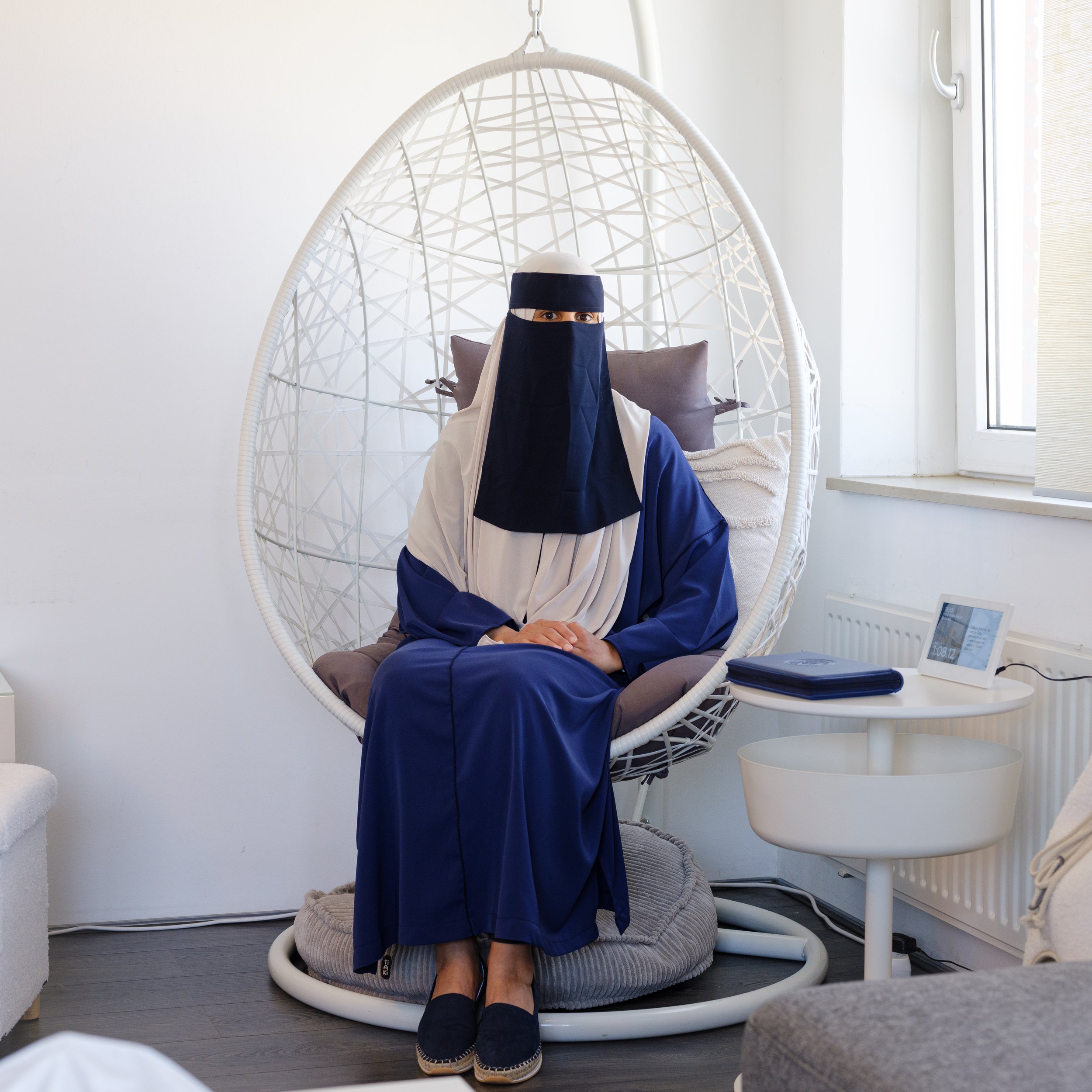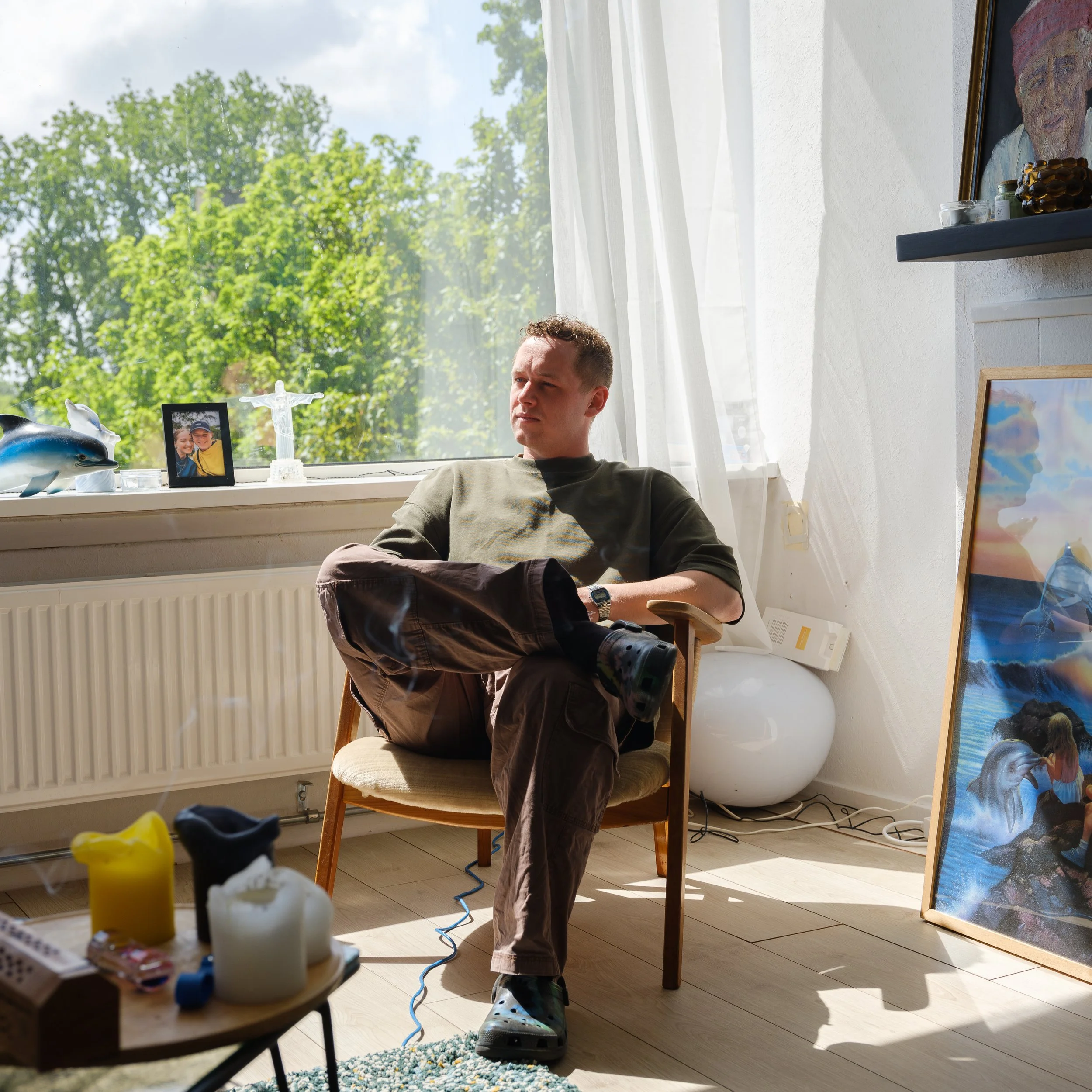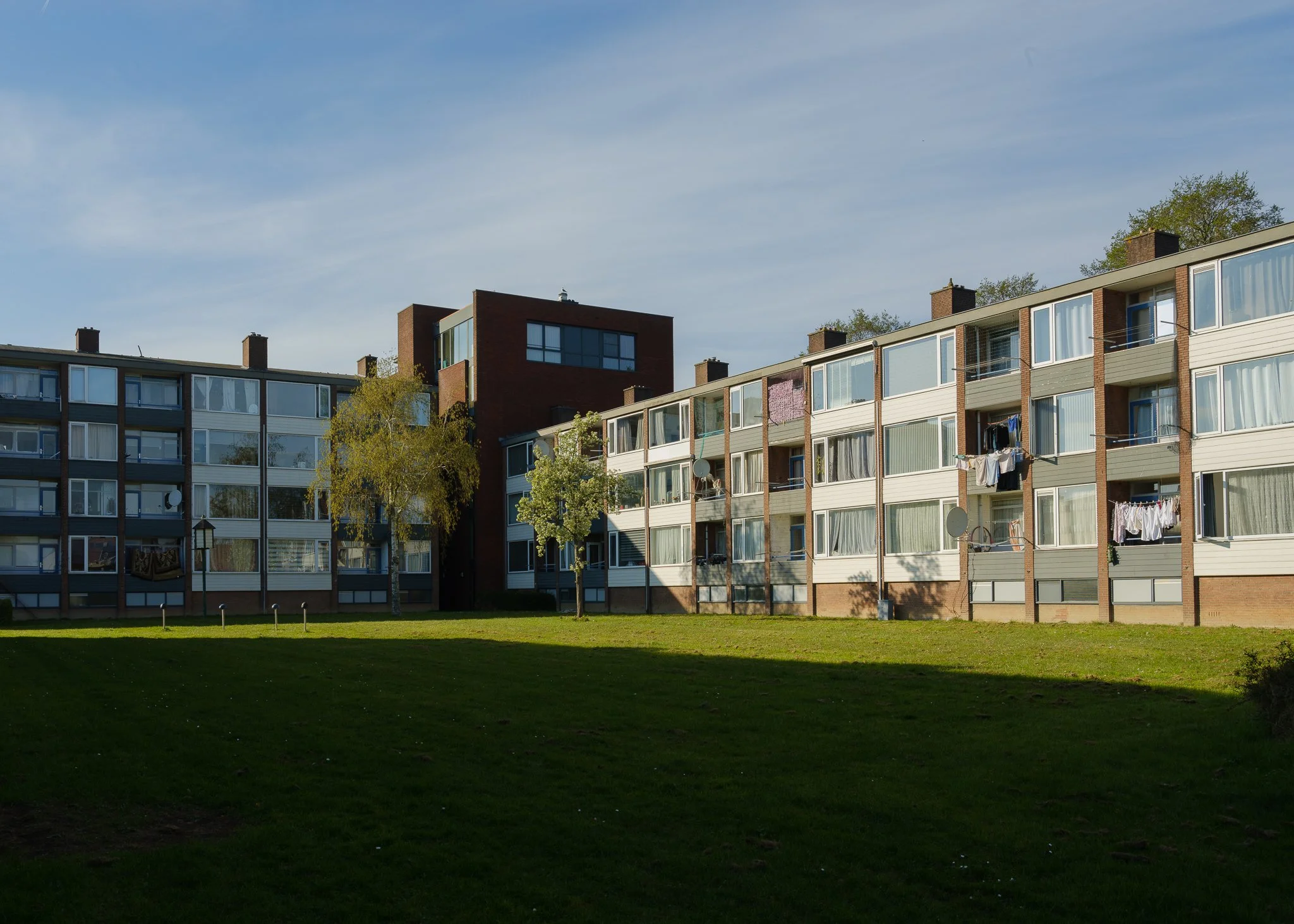
Shrinking Space is a photographic research project that explores how adults from diverse backgrounds
navigate housing insecurity in the Netherlands. The project began with the story of my close friend
Tessa, who has been living in a temporary house and now faces the uncertainty of having to find a
new place. Her situation brought the housing crisis into sharp personal focus for me, and it sparked
my interest in social housing as both a lived reality and a contested political issue.
Rooted in my own personal history as the daughter of Somali refugees who built a life through social
housing, the work expands this starting point into a wider reflection on the housing struggles faced by
many. It brings together intimate portraits and personal stories of people living in temporary housing,
kraakpanden, or recently secured homes. These encounters reveal not only the structural inequalities
that shape the crisis, but also the resilience, creativity, and survival strategies through which people
carve out space for themselves. Each portrait carries traces of emotional weight: the uncertainty of
displacement, the longing for stability, and the enduring hope of belonging.
Alongside the photographs, the project includes a handmade maquette retracing every home my
family lived in while growing up. Constructed from simple foam boards and held together with pins,
the model becomes a fragile archive in itself. Onto its surfaces I place copies of archival photographs
of myself as a child in these houses, layering memory onto structure. This maquette is less an
architectural object than a personal map… a way of showing how houses are never just walls and
roofs, but containers of sentiment, memory, and identity. It demonstrates how built environments hold
the stories of our lives long after we have moved on.
By weaving together photography, personal archive, and installation, Shrinking Space invites
reflection on belonging, policy, and the right to space. In a time of shrinking options, rising inequality,
and growing hostility toward migrants, the project asks: how do we hold space for one another? And
what kind of future are we willing to build together?